
Graphite Solids for Kitchens That Work After Four
Graphite solid surface holds an evening galley only if the face is honed, the edge stays quiet, and lamp colour is locked before the sheet is ordered.
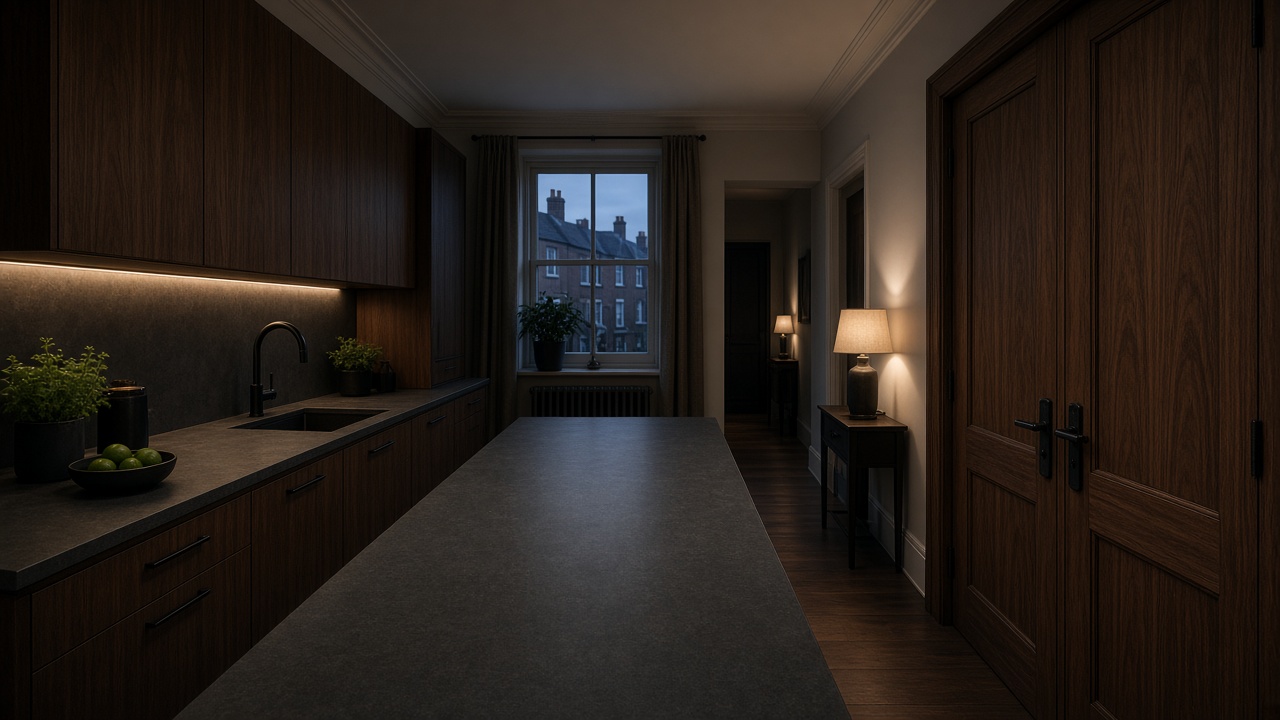
Townhouse galleys that come alive after work need a dark plane that still has a grain under warm lamps. Work-Tops specifies graphite solid surface by the colour of those lamps first, then by a honed face that will not turn pendant pools into cheap sparkle once the garden has gone black. A polished chip loved at noon is the usual trap.
Dusk changes graphite more than a noon sample admits
In a north-facing galley the board you loved at midday can look like wet tarmac once the garden light drops. Graphite acrylic solid surface is pigment through the sheet, so it does not rely on the sparkle of a quartz slab. That is an advantage in the evening, provided you choose a honed or satin face. High polish bounces every downlighter into a stripe, and the room starts to feel like a club rather than a kitchen you cook in after work.
Walk the room at five with a board held against the cabinet door, not laid on a white table. If the graphite still shows a faint brown or blue undertone under your actual pendants, keep it. If it collapses to black, step to a slightly lifted charcoal with a mineral fleck that catches lamp light without going glossy.
Pendulums of warm light need a mineral grain, not a void
Warm lamps at 2700K pull a brown note out of many graphites; cooler 4000K strips make the same sheet look inky and thin. Specify the lamps with the surface. A Clerkenwell basement templated last winter used three brass pendants over a 3.2 metre run: the honed graphite kept a mineral grain visible, while a polished offcut from the same colour went dead between the pools of light. Through-colour sheet also lets you build a modest edge without a contrasting core.
A twelve-millimetre sheet with a forty-millimetre built-up nose reads as a furniture lid, not as a laboratory bench. In an evening kitchen that silhouette matters more than a waterfall end.
- Judge boards under the pendant lamps you will keep, not under a contractor flood.
- Prefer honed or satin graphite; polish belongs in brighter, paler rooms.
- Keep the edge quiet: a small pencil or built-up square beats a showy ogee.
Hob, bowl and the silhouette you actually cook against
An induction hob set flush in graphite almost disappears, which is the point, but the cut-out still needs a heat protocol. Solid surface will scorch if a pan is left to roar on a dry ring. Specify a trivet habit and a hob with a residual-heat warning, then keep at least fifty millimetres of surface between the glass and the front edge so knuckles do not meet a dark arris in low light. Drainer grooves cut into graphite show every crumb after supper. A separate teak board or a folded draining rack is kinder.
If you want an integral solid-surface bowl, bond it in the same colour so the evening silhouette stays one piece from wall to tap. A stainless rectangle punches a cold hole in the composition you have just built. Cable the hob through the carcass, not through a slot you will see from the stools.
Live with graphite without turning the deck into a fingerprint stage
Honed graphite hides smears that a gloss sheet would advertise. A damp microfibre and a non-abrasive cream are enough; avoid polish restorers that slowly raise the sheen you spent the specification avoiding. Deep scratches can be sanded back through the colour, which is why this material suits a kitchen that is used after work rather than staged for photographs. If the galley also carries walnut doors, let the worktop stay cooler than the timber. Graphite with a faint blue-grey grain will sit beside walnut without turning the wood ginger.
Lock the colour only after you have cooked one evening meal with the sample taped to the hob wall.
- Tape a sample to the hob wall and cook under the real lamps before you order sheet.
- Ban silicone polishes; they rebuild the gloss an evening kitchen does not want.
- Plan heat pads as part of the scheme, not as an afterthought on fit day.
Next step with Work-Tops
Order a sample, then request a fitted quote or browse the worktop collection. The colour should be judged in your own daylight before anyone templates the run.